AI video quality repair has gone from a niche professional tool to mainstream use in just a few years. This article analyzes the four major reasons behind the boom, looks ahead to 2026 technology trends, and shows how Miaomiao AI is leading the free, browser-based repair trend that makes this technology accessible to everyone.
4 Major Reasons for AI Video Repair Boom
The rapid adoption of AI video repair is driven by a combination of technology, market, cost, and application factors that all matured at the same time.
Tech Breakthrough
Modern super-resolution models such as Real-ESRGAN and diffusion-based restorers can now reconstruct believable detail from heavily compressed or low-resolution sources. GPU performance and model optimization have made it possible to run these models in seconds rather than hours.
Market Demand
Short video platforms, retro content digitization, and surveillance use cases have created massive demand for quality improvement. Creators, families, and investigators all need a fast way to make footage clearer without learning professional software.
Cost Reduction
Cloud GPU pricing has dropped sharply, and WebGPU plus ONNX runtime allow inference directly in the browser. This removes the need for expensive desktop software or powerful local hardware, which was the main barrier to entry for most users.
Application Expansion
AI repair now serves far more than Hollywood post-production. It is used for short videos, family archives, surveillance, education, e-commerce product videos, and live streaming, expanding the addressable market well beyond traditional video professionals.
2026 AI Repair Technology Development Trends
Looking at the technology roadmap, four trends are shaping where AI video repair is heading in 2026.
- Real-time repair: Models are moving closer to per-frame processing fast enough for live preview and even live streaming, not just offline export.
- 8K popularization: As 8K displays become affordable, demand for 8K upscaling is growing, and models are being trained specifically for 8K output.
- Edge computing: WebGPU and on-device inference allow repair to run locally without uploading videos, improving both speed and privacy.
- Multimodal processing: Models combine video, audio, and text understanding to perform tasks like lip-sync repair, subtitle generation, and content-aware enhancement in one pass.
AI Repair Market Data
The table below summarizes the trajectory of the AI video repair market, based on aggregated industry reports and platform user growth indicators.
| Year | Market Size (USD) | User Growth | Tech Maturity |
|---|---|---|---|
| 2023 | ~320 million | Baseline | Early adoption, mostly desktop |
| 2024 | ~540 million | +65% | Browser tools appear |
| 2025 | ~880 million | +60% | Real-time and 8K models mature |
| 2026 (forecast) | ~1.3 billion | +50% | Mainstream, edge + multimodal |
Miaomiao AI Leads Free Repair Trend
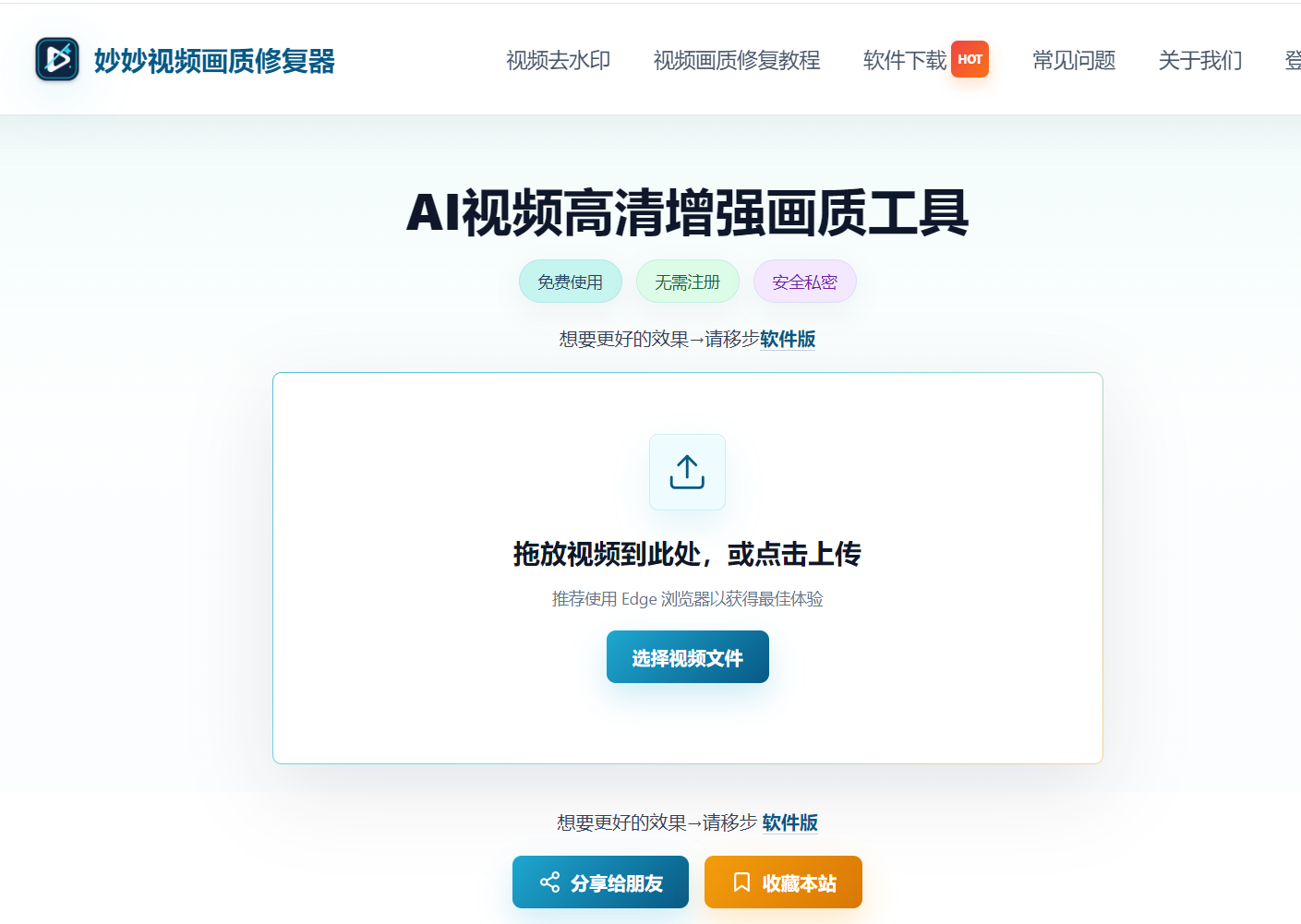
Among the tools riding this trend, Miaomiao AI stands out by combining accessibility with serious capability. It runs entirely in the browser, processes video locally so footage never leaves the device, and offers core upscaling features for free without registration.
- Browser-based, no install: Works on Windows, macOS, and mobile through a standard browser
- Local processing: Privacy-friendly, no upload to remote servers
- Up to 8K upscaling: Supports 2K, 4K, and 8K output for modern displays
- Free core features: Core quality repair and upscaling are free with no watermark
Future outlook: as WebGPU adoption widens and multimodal models mature, expect AI repair to become a default step in every video workflow, much like color correction is today. Miaomiao AI is positioned to keep this capability free and accessible as the trend accelerates through 2026 and beyond.
Join the free AI video repair trend with Miaomiao AI, no download required
Repair Video Now →Conclusion
AI video quality repair has become popular because four forces matured at once: technology breakthrough, surging market demand, lower cost, and broader applications. The 2026 roadmap points toward real-time, 8K, edge, and multimodal repair. Miaomiao AI represents the new wave of free, browser-based, privacy-friendly tools that are making this technology available to everyone, not just professionals.
Frequently Asked Questions
Why is AI video repair becoming mainstream now?
Because super-resolution models, affordable GPU compute, and browser-based inference all matured together, making repair fast and cheap enough for everyday creators, families, and investigators, not just professionals.
Will AI video repair replace professional software?
For most consumer and short video use cases, yes. For high-end cinema post-production, professional tools still lead on control and quality, but the gap is narrowing fast as models improve.
Is Miaomiao AI really free for video repair?
Yes. Miaomiao AI runs in the browser with local processing, requires no registration, and offers its core upscaling and repair features for free with no watermark on the output.